
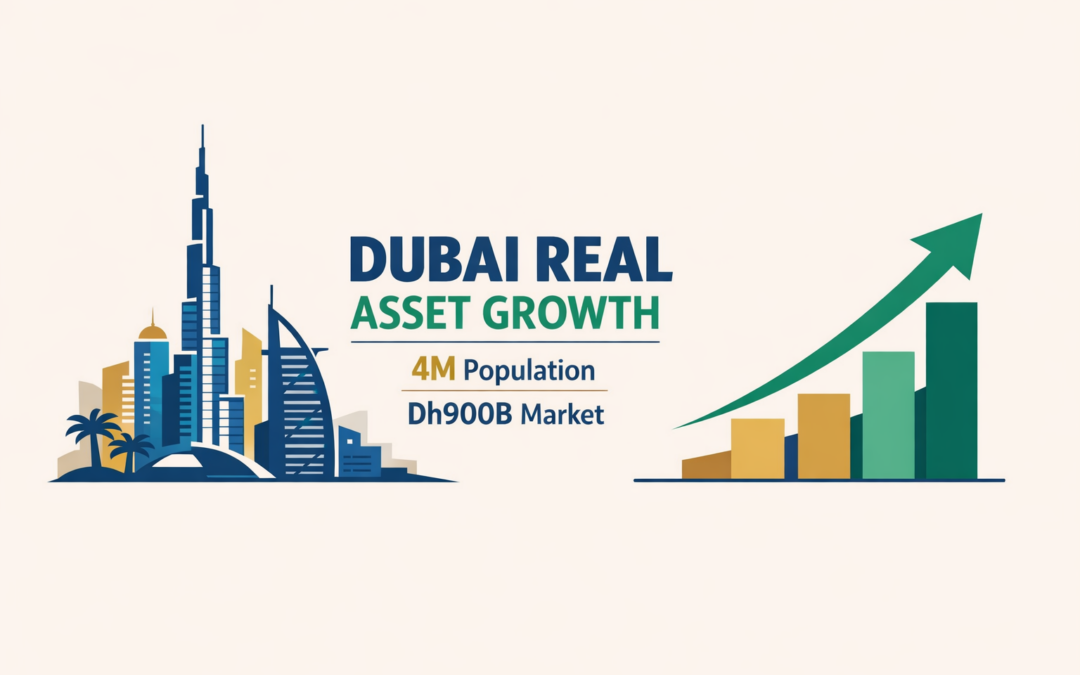
The Dubai real estate market 2025 has officially entered a new era. As of late 2025, the emirate’s population has surpassed the four million mark, and total real estate transactions have hit a record Dh919 billion – a shift from speculative cycles to durable, demographic-driven demand. This expansion is more than a headline; it’s the catalyst of a Real Asset World, accelerating tokenization and maturing real estate into a global institutional asset class.
Read More : Dubai Real Estate Market Reaches Record Dh917 Billion in 2025: What It Means for Investors?
Dubai’s Population Boom: 18,000 New Residents Fuelling the Real Estate Market Every Month
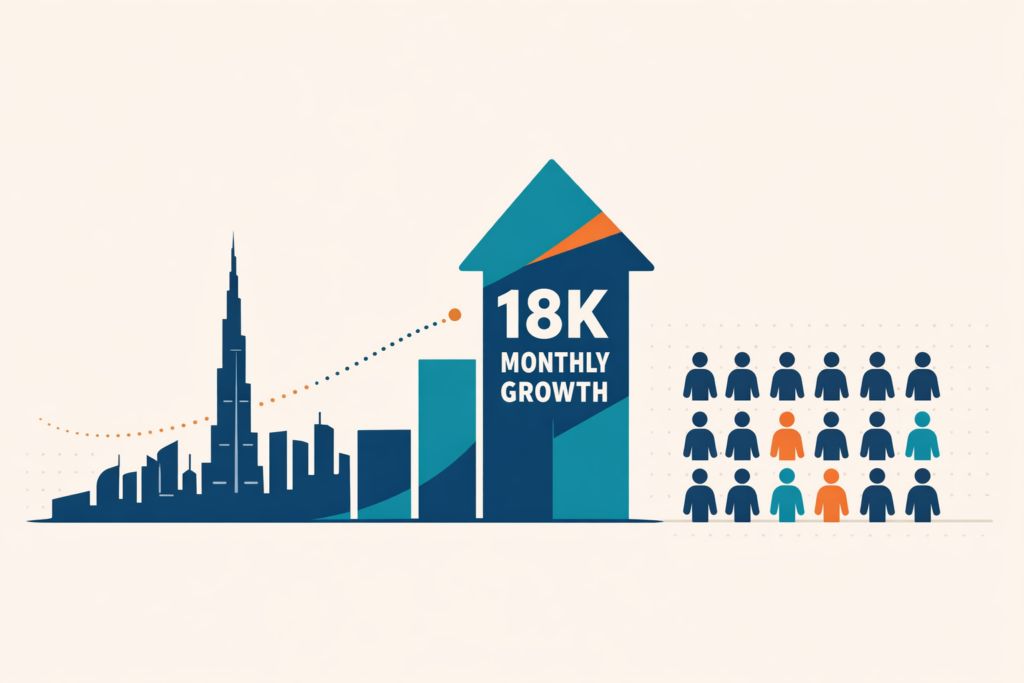
By the end of August 2025, Dubai was adding roughly 18,000 residents per month, propelled by job creation, corporate relocations, and sustained international migration. Savills Middle East observes that this population surge is supporting broad-based demand well beyond trophy assets, with absorption across multiple price points and communities.
Three Buyer Cohorts Driving Dubai Property Demand in 2025
- Mid-income professionals seek apartments in integrated hubs such as Dubai Hills and JVC to stay close to employment nodes.
- High-net-worth individuals favour prime waterfront addresses and exclusive villa communities as part of broader wealth relocation.
- Long-term relocators—often families moving for lifestyle and safety—are transitioning from renters to end-users.
This demographic engine explains the resilience of volumes in 2025 even as many global markets cooled, underscoring a demand curve anchored in real household formation rather than short-term speculation.
Read More: Dubai Real Estate Records Historic Surge in January 2026
Dubai Real Estate Transactions 2025: Dh919 Billion in Liquidity and Depth
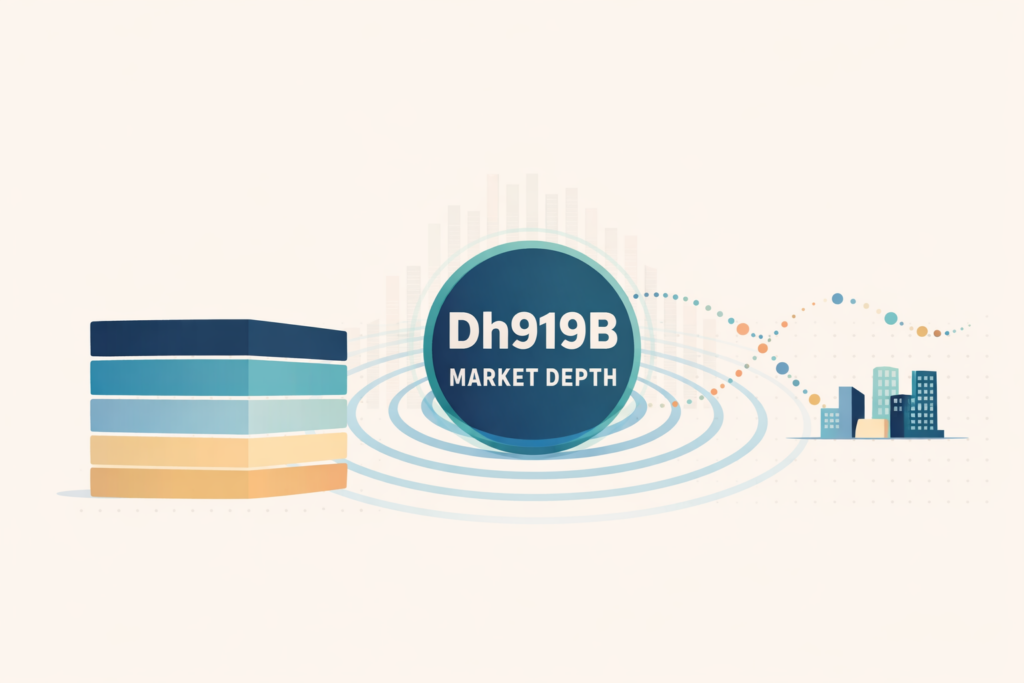
Dubai Land Department data shows property sales of approximately Dh680 billion across more than 200,000 transactions in 2025. Including mortgages and gifts, total transactions are estimated at around Dh919 billion. The fourth quarter alone delivered over Dh187 billion—the highest quarterly sales value on record—signalling a deep and liquid market that is engaging both investors and end-users.
Key segments include:
Prime Residential: Nearly 6,000 Deals Above Dh10 Million in Dubai
- Supported by limited supply in established districts and ongoing wealth migration.
UAE Central Bank Rate Cuts Driving Mortgage Activity and End-User Demand
- Easing rates from the UAE Central Bank have reduced borrowing costs, pulling forward demand from end-users who had delayed decisions.
Collectively, these figures point to a market with breadth and depth—not a flash of speculative heat, but a sustained participation base that can absorb new inventory across cycles.
Read More : How JVC to Dubai South Led Dubai’s Property Growth in 2025 — and What 2026 Signals Next
Real Estate Tokenization in Dubai 2025: Solving the Supply–Demand Puzzle
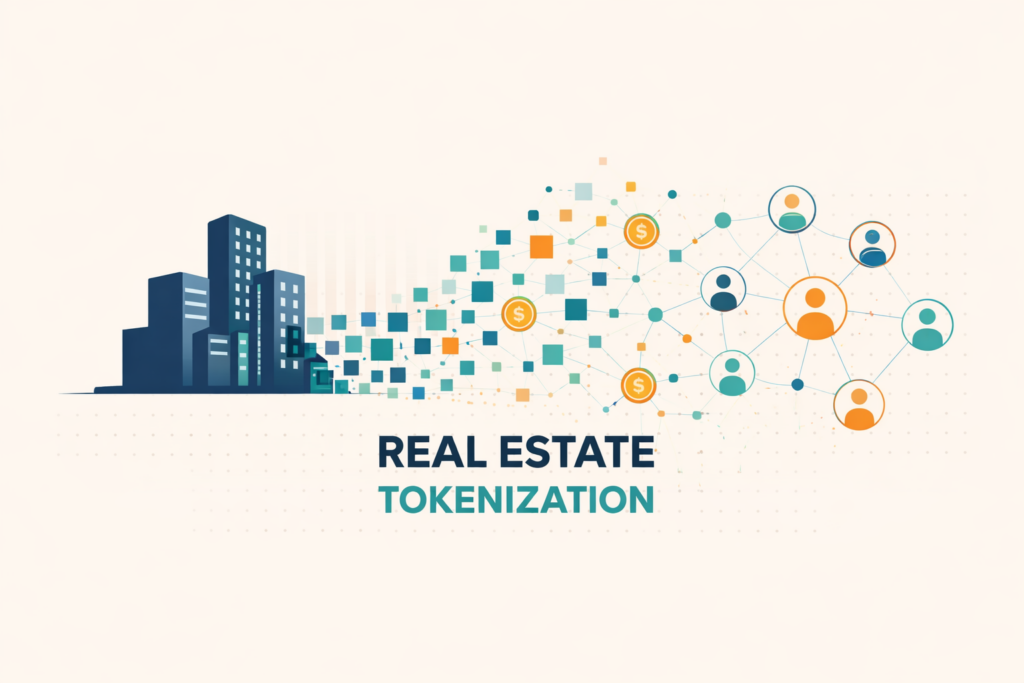
With population targets pointing toward nearly six million residents by 2040, expanding access to high-quality real estate exposure becomes essential. Tokenization provides the mechanism for fractional ownership, opening doors for residents who might otherwise be priced out of prime locations.
How Fractional Ownership Is Democratising Dubai Property Investment
- Democratizing yield: Renters can hedge cost-of-living by owning tokens in income-generating assets—commercial buildings, managed apartments—and share in the liquidity of a Dh919 billion market.
- Institutional efficiency: Atomic, blockchain-based settlement can reduce administrative friction, speed up transfers, and facilitate secondary liquidity, enabling the market to scale without sacrificing compliance or investor protections.
As assets move on-chain, transparent registries and regulated custodial frameworks can connect Dubai’s physical build-out with efficient digital rails, aligning with the city’s broader digital-economy agenda.
Dubai Property Market 2025: Lower Rates and the Rise of End-User Buyers
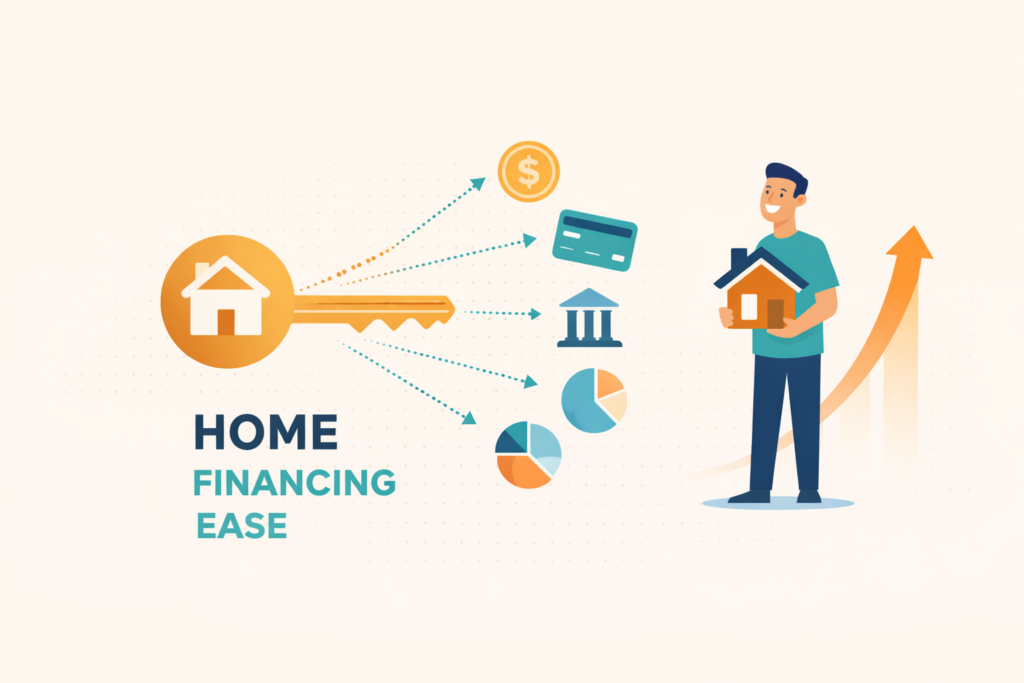
A defining feature of 2026 is improving financing conditions. Rate reductions have bolstered household confidence, making property comparatively more attractive than many global fixed-income alternatives—particularly given Dubai’s competitive rental yields. Market “normalization” is underway as the share of end-users rises, providing a stable foundation that reduces volatility versus investor-only ecosystems.
This end-user pivot also reshapes product design: developers are emphasizing liveability, community amenities, and proximity to transit and employment to meet the needs of households committing to longer tenures.
Read More : Your 2026 Strategic Guide to Buying, Renting, or Investing in Dubai Real Estate
Dubai Real Estate 2040 Vision: Transit Communities, Supply Discipline & RWA Integration
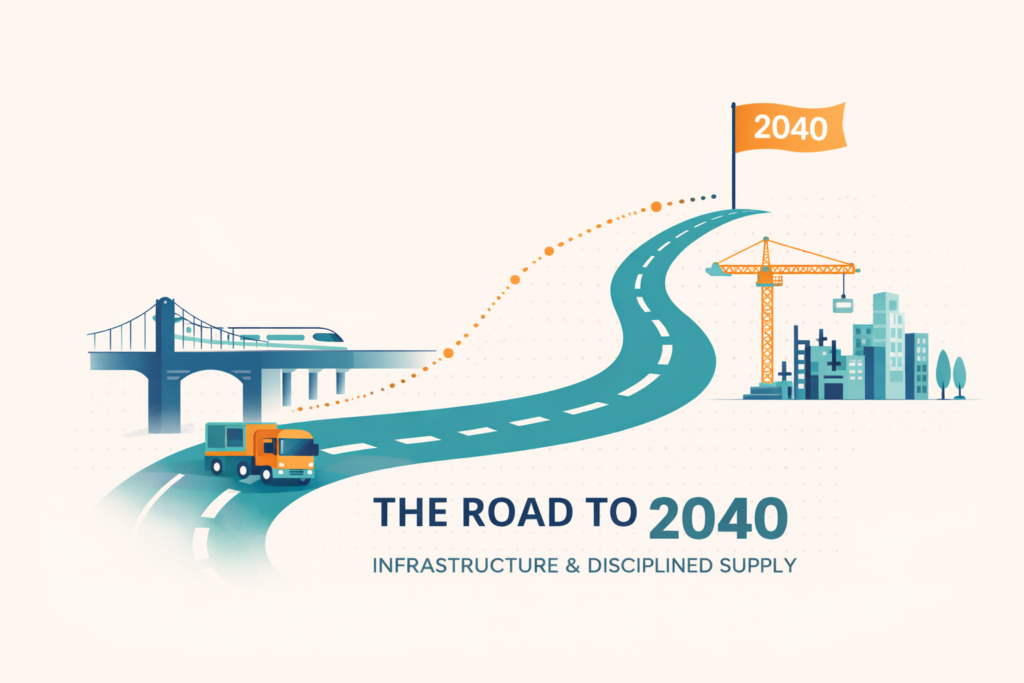
As Dubai plans for its next two million residents, the emphasis is on infrastructure-led growth and disciplined supply. The projects most likely to outperform will be:
- Transit-adjacent communities that shorten commutes and integrate retail, health, and education.
- Quality-first developments with rigorous phasing that matches demand, reducing boom–bust risk.
- RWA integration that brings regulated, liquid investment vehicles to a broader investor base as the city scales.
The alignment of planning, regulation, and institutional capital should support smoother cycles and higher-quality outcomes across the built environment.
Read More : Dubai Moves Ahead with Dh38bn Housing Expansion at Palm Jebel Ali and Nad Al Sheba
Dubai Real Estate Market 2025: Why This Record Year Marks a Permanent Shift
Dubai’s record-breaking year—nearly Dh919 billion in real estate transactions and a resident base above four million—confirms its ascent to a top-tier global housing market. Rapid population growth, improving affordability through lower borrowing costs, and the advance of tokenization are reshaping property into a sophisticated real-asset platform.
Looking toward 2026 and beyond, the fusion of technology and tangible assets will redefine ownership and liquidity. In a city of four million people and nearly a trillion dirhams in annual transactions, on-chain, fractionalized real estate stands out as one of the most compelling opportunities of the decade.
Source: gulfnews.com