
Rent-to-own property in Dubai has emerged as the most accessible path to homeownership in 2026 – and the numbers confirm why. Dubai’s property sector continues to shatter records, with 2025 closing at a staggering AED 686.8 billion in total transaction value, as reported by DXB Interact. This volume reflects a maturing market where resident aspirations are firmly shifting toward long-term stability.
For many, the hurdle of traditional financing – specifically the hefty upfront capital required – has made rent-to-own (RTO) schemes the primary vehicle for property acquisition in Dubai in 2026. This model provides a structured bridge for those looking to pivot from tenant to homeowner, without the immediate strain of a conventional mortgage.
What Is a Rent-to-Own Property Agreement in Dubai?
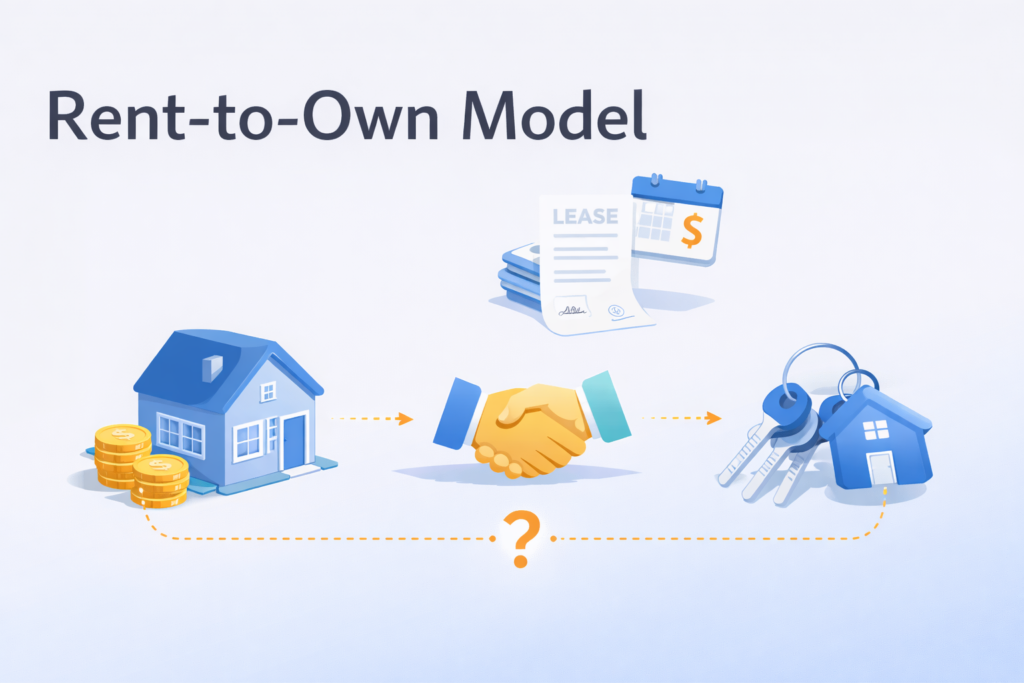
At its core, an RTO agreement is a hybrid contract that merges a standard lease with a future sales agreement. Typically spanning 2 to 5 years, the arrangement allows a portion of your annual rent to be set aside as equity toward the eventual purchase of the home.
The most significant advantage in Dubai’s current climate is the price freeze. By locking in a purchase price at the start of the lease, you are protected from the capital appreciation that often occurs in high-demand districts, effectively growing your wealth while you live in the property.
Why Rent-to-Own Schemes Are Surging in Dubai in 2026
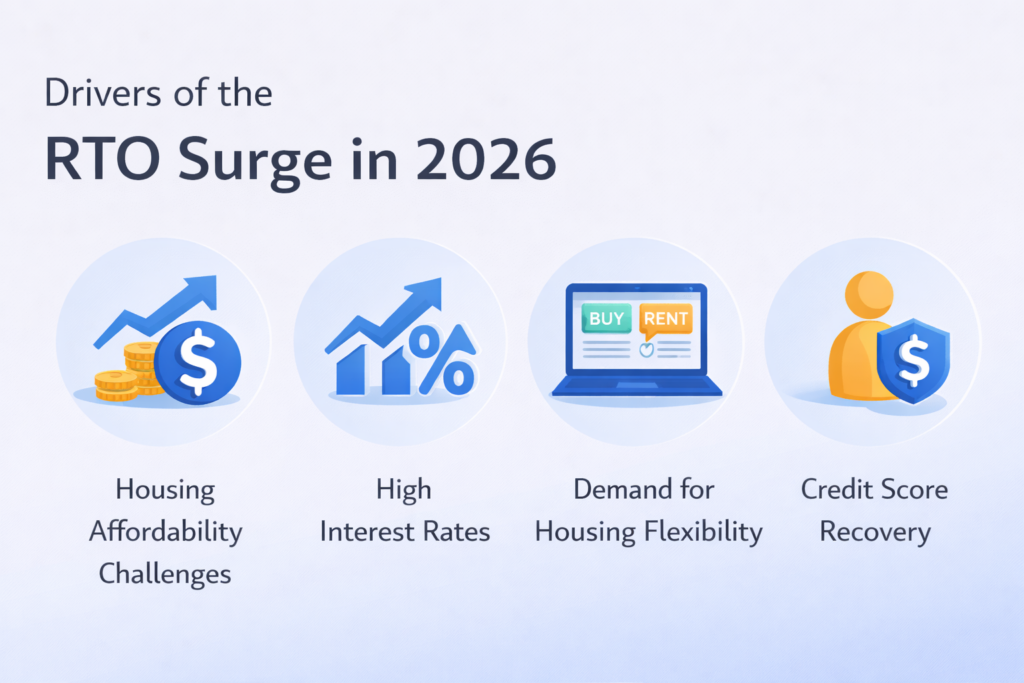
The surge in these schemes isn’t accidental; it’s a result of a highly regulated environment fostered by RERA to enhance market inclusivity.
Bypassing the High Down Payment Requirement
While the UAE Central Bank typically mandates a 20% to 25% down payment for expatriates, RTO schemes allow residents to build this amount gradually, making entry into the market far more attainable for salaried professionals.
A “Try Before You Buy” Approach to Property
Residents moving into emerging communities can assess the lifestyle and infrastructure of a neighborhood before fully committing to the deed.
The Golden Visa Effect on Property Decisions
With the Golden Visa becoming a standard goal for many, owning property is a key requirement. RTO offers a manageable timeline to fulfill these residency milestones.For a full breakdown of property investment strategies in Dubai, explore our 2026 Dubai property investment guide.
How a Rent-to-Own Deal Works: Step-by-Step Process
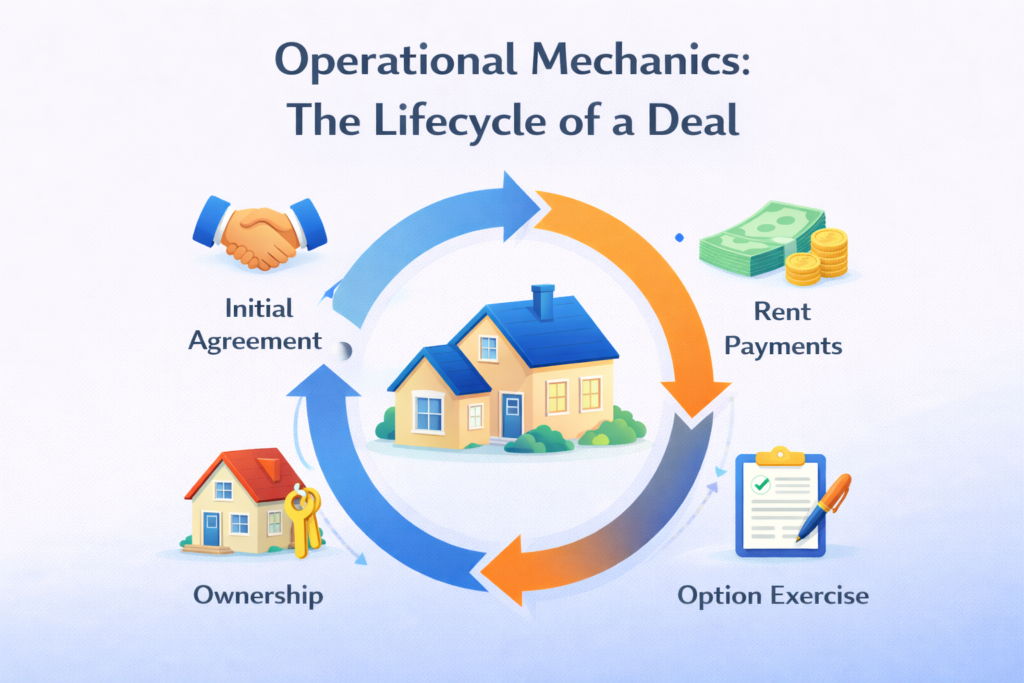
For those looking to enter a contract in 2026, the process is standardized across most major developers in areas like Dubai South, Al Furjan, and Jumeirah Village Circle (JVC). You can browse available properties across Dubai South and JVC directly on our listings page.
The Option Fee: Your Commitment to Buy
You begin with an “option fee,” usually 5% to 10% of the property’s value. This acts as a security deposit that guarantees your exclusive right to buy.
The Accumulation Phase: Building Your Equity
You pay a “premium” rent – slightly above the market average – where a designated percentage is credited toward your 20% to 30% equity goal.
Final Settlement: Completing the Purchase
Upon the conclusion of the term, you exercise your right to purchase. The total credits earned are deducted from the initial locked-in price, and the remaining balance is settled via a bank loan or personal savings.
Legal Framework: How the DLD Protects Rent-to-Own Buyers
The Dubai Land Department (DLD) has streamlined the legalities to ensure both parties are protected.
Official Registration with the DLD
Unlike a standard Ejari, RTO contracts are recorded as a Memorandum of Understanding (MoU) with the DLD, clearly defining the rental credits and exit clauses.
Escrow Protection for Off-Plan Buyers
For off-plan projects, your payments are held in regulated accounts, ensuring that your path to ownership remains secure regardless of the developer’s status.
Rent-to-Own vs. Traditional Mortgage in Dubai: Full Comparison
| Feature | Rent-to-Own Model | Traditional Mortgage |
| Initial Capital Required | Lower (5–10% option fee) | Higher (20-25% Deposit) |
| Approval Process | Immediate — no bank needed | Requires mortgage pre-approval |
| Market Price Risk | Locked-in purchase price | Exposed to market fluctuations |
| Exit Option | Can walk away (lose credits) | Bound by debt obligation |
Pros and Cons of Rent-to-Own Property in Dubai
Benefits of Rent-to-Own in Dubai
- Price freeze protection.
- Gradual equity building.
- No immediate mortgage burden.
- Golden Visa pathway.
- Try-before-you-buy flexibility.
Risks and Drawbacks to Consider
- Premium rent above market rate.
- Loss of credits if purchase fails.
- Requires stable 3–5 year financial outlook.
Best Neighbourhoods for Rent-to-Own Properties in Dubai (2026)
In 2026, the inventory for these schemes is highest in family-centric and tech-focused hubs:
Dubai South
Ideal for those looking at the expansion near Al Maktoum International Airport.
Also Read : Dubai Moves Ahead with Dh38bn Housing Expansion at Palm Jebel Ali and Nad Al Sheba
Jumeirah Village Circle (JVC) and Al Furjan
High-demand areas for apartments and townhouses.
Silicon Oasis
A favorite for the professional community.
Business Bay
Offering premium RTO options for the urban elite.
Also Read : Downtown Dubai 2026: Why It Remains a Prime Investment Destination
Is Rent-to-Own Right for You? Final Thoughts
As Dubai continues to evolve into a global residency hub, the Rent-to-Own model is no longer a niche product but a cornerstone of the 2026 real estate market. By blending the flexibility of a tenant with the ambition of an owner, it provides a realistic, regulated, and rewarding way to secure a permanent stake in the city’s future.
Frequently Asked Questions?
Yes. Rent-to-own contracts in Dubai are fully regulated by the Dubai Land Department (DLD) and must be registered as an official MoU. RERA provides the compliance framework governing all such agreements.
Absolutely. Rent-to-own is particularly popular among expatriates as it bypasses the standard 20–25% bank deposit requirement and allows equity to build over a 2–5 year period.
If you are unable to complete the purchase, you typically forfeit the accumulated rental credits and the option fee. It is critical to pre-qualify with a lender before signing any RTO agreement.
This varies by developer and contract, but typically between 20% and 40% of the monthly rent payment is credited toward the purchase price equity.
The highest inventory is in Dubai South, Jumeirah Village Circle (JVC), Al Furjan, Silicon Oasis, and Business Bay, where multiple major developers actively offer RTO programmes.