
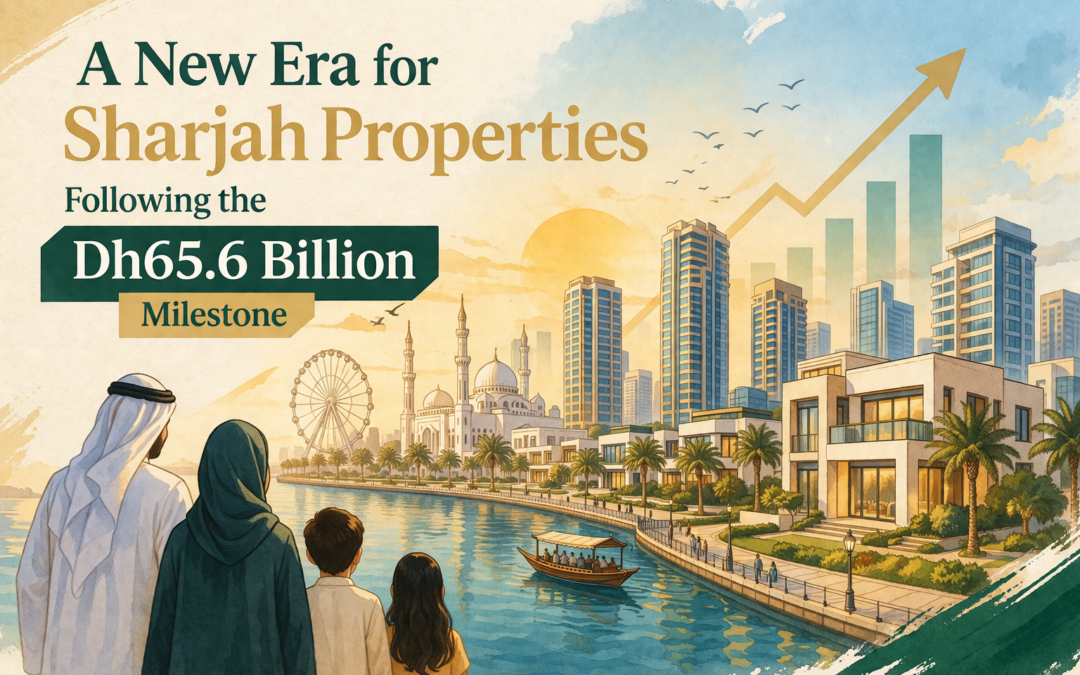
The Sharjah real estate market sector has officially entered a new era of unprecedented growth, concluding 2025 with a historic Dh65.6 billion in trading value. This milestone, representing a massive 64.3% increase over the Dh40 billion recorded in 2024, highlights the emirate’s rising status as a preferred destination for global capital and long-term residency. Sharjah property investment 2025 has emerged as one of the most discussed topics among regional and international buyers alike. As of early 2026, the momentum shows no signs of slowing, with sustained high levels of transaction activity signaling a broader structural shift in the Northern Emirates property market and the emirate’s wider economic landscape..
Sharjah Real Estate by the Numbers: 2025’s Structural Transformation

According to the latest annual report from the Sharjah Real Estate Registration Department (SRERD), the sector didn’t just grow; it underwent a deep structural transformation. The total number of transactions reached 132,659, a 26.3% rise from the previous year.
The most significant driver was the surge in outright sales, which climbed to 33,580 transactions—a 38.4% year-on-year increase. Beyond volume, this trend signals an evolving demand profile, with the market gradually moving away from short-term speculative activity toward a more balanced mix of end-users and long-term investors. Sharjah real estate rental yields are often estimated in the 6% to 9% range, reinforcing its positioning within the UAE’s broader risk-return spectrum.
When evaluating Sharjah vs Dubai real estate, the contrast becomes clear. While Dubai commands premium valuations and global brand recognition, Sharjah offers lower entry points, stronger rental yields, and a growing legislative framework that increasingly favours long-term ownership. For investors seeking value without compromising on connectivity or lifestyle, Sharjah is fast becoming the rational alternative.
Global Investor Participation: 129 Nationalities Now Buying Property in Sharjah
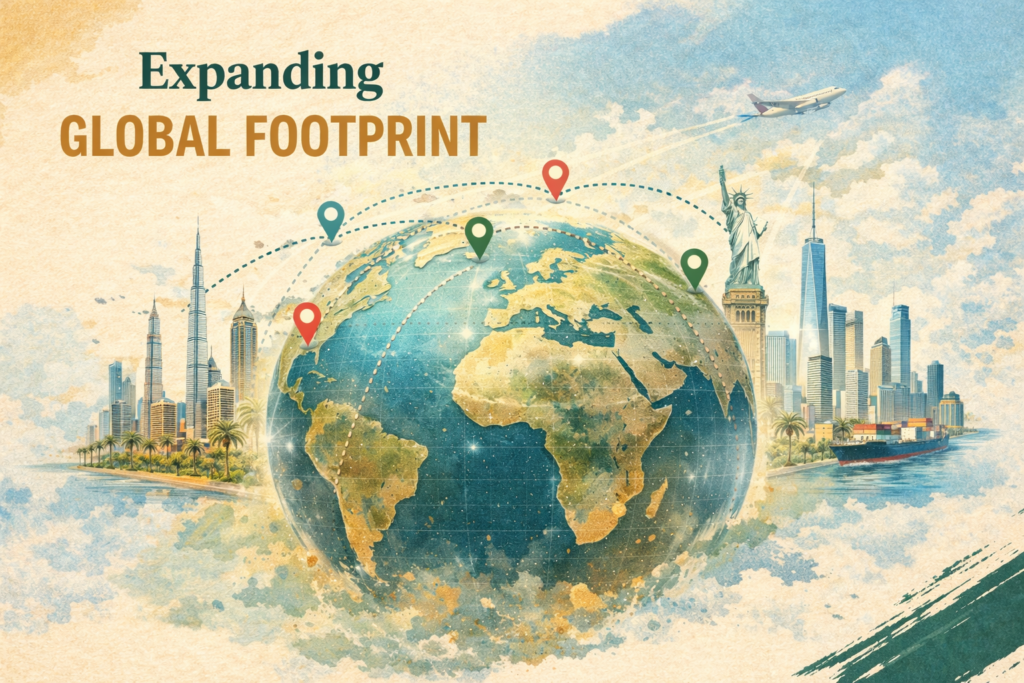
Sharjah’s appeal has transcended regional borders, evolving from a local market into a globally recognized real estate hub. In 2025, investors from 129 different nationalities participated in the emirate’s property sector, a notable increase from 120 the previous year. UAE Nationals remained the primary drivers of the market, accounting for Dh33.8 billion in deals across more than 41,000 properties, while Foreign Investors traded a total of 60,322 properties, a substantial jump from 45,676 in 2024.
Within this influx of global interest, Non-Arab international investors contributed Dh18.5 billion, while Arab and GCC investors added approximately Dh13.2 billion combined. This international diversification is largely credited to the Sharjah government’s legislative reforms, including the expansion of freehold ownership rights for all nationalities across designated Sharjah freehold zones 2025 – significantly simplifying the process to buy property in Sharjah for foreigners – and the introduction of long-term residency linked to property investment.
Mortgage Activity in Sharjah Surges 45.1% – What It Signals for the Property Market
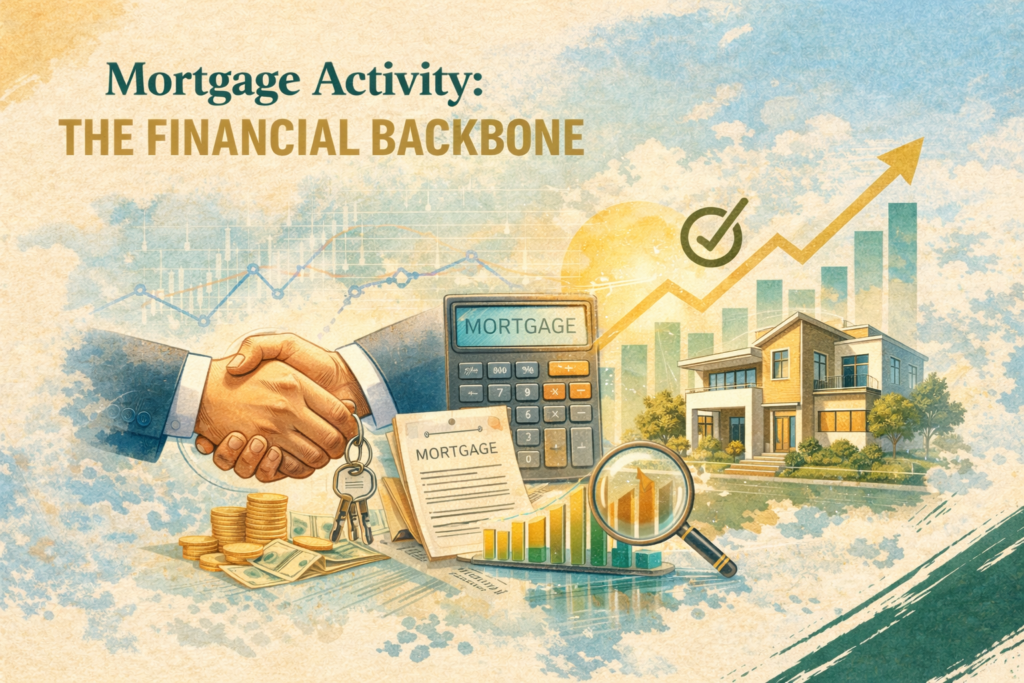
Mortgage activity in Sharjah has seen a notable increase, with transactions reaching 6,300 and a total value of Dh15.5 billion -representing a 45.1% rise compared to 2024.
This expansion in financing reflects growing confidence not only among buyers but also within the banking sector. Increased mortgage uptake is often indicative of a maturing market, where financial institutions are more willing to underwrite real estate assets based on stable demand and improving fundamentals.
Who Is Taking Mortgages in Sharjah? Expats vs. Nationals
UAE Nationals continue to lead mortgage activity in Sharjah, driven by government-backed financing schemes and preferential lending rates offered by local banks. However, the more notable shift in 2025 has been the growing participation of expatriate buyers, particularly those from South Asia, Europe, and other GCC countries, who are increasingly leveraging mortgage products to transition from long-term renting to property ownership.
For expats, most UAE banks offer mortgage financing of up to 75% of the property value for a first property, subject to income verification and residency status. With Sharjah’s relatively lower property prices compared to Dubai, monthly mortgage repayments are often comparable to – or even lower than – rental costs in neighbouring emirates, making ownership a financially logical step for many long-term residents.
At the same time, the availability of more flexible financing solutions is supporting broader market accessibility, enabling a wider segment of residents to transition from renting to homeownership – particularly as affordability pressures continue to build in neighbouring emirates.
Industrial & Commercial Real Estate in Sharjah: The Growth Behind the Numbers
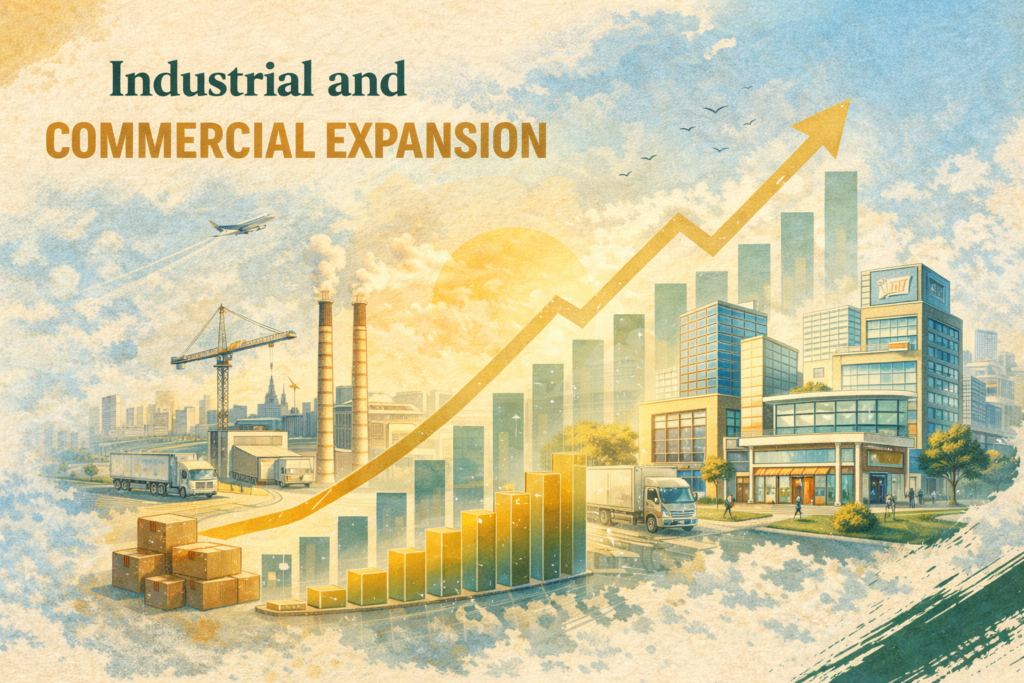
A key pillar underpinning Sharjah’s Dh65.6 billion performance is the strength of its industrial and commercial real estate segments. As one of the UAE’s established industrial hubs, the emirate continues to see sustained demand for logistics facilities, warehouses, and light-industrial assets.
Areas such as Sajaa Industrial Oasis and Al Tay have emerged as strategic locations for businesses seeking connectivity to both the Arabian Gulf and the Gulf of Oman.
Key Industrial Zones: Sajaa Industrial Oasis and Al Tay Explained
Sajaa Industrial Oasis is one of Sharjah’s most established industrial clusters, home to over 1,000 factories and warehouses spanning sectors including manufacturing, packaging, food processing, and logistics. Its strategic location provides direct road access to Dubai and the northern emirates, while also offering proximity to Sharjah International Airport – making it a preferred base for businesses requiring fast regional distribution.
Al Tay, on the other hand, represents Sharjah’s newer generation of mixed-use industrial development. Positioned along the emirate’s eastern corridor, Al Tay is emerging as a hub for light industrial units, SME warehousing, and commercial showrooms. Its master-planned layout and modern infrastructure are attracting a new wave of investors seeking both capital appreciation and long-term rental income from industrial assets.
Together, these two zones illustrate why Sharjah’s real estate story is not just residential – it is anchored in real economic activity, which provides far greater long-term market stability.
The commercial segment has also experienced solid growth, supported in part by the continued expansion of small and medium enterprises (SMEs).
This diversification plays a critical role in shaping Sharjah’s real estate profile. By maintaining a strong link between property demand and underlying economic activity, the market is less reliant on residential cycles and better positioned for long-term stability.
How Sharjah’s Smart Property Registration is Attracting International Investors

A key contributor to Sharjah’s recent performance has been the ongoing digitalization of its real estate registration and regulatory processes. The Sharjah Real Estate Registration Department’s (SRERD) smart services have enhanced transaction efficiency, enabling investors to register and manage properties with greater speed and transparency.
This shift toward a more streamlined and technology-enabled ecosystem is playing an important role in strengthening the market’s competitiveness. By reducing administrative friction and improving accessibility for international investors, digital infrastructure is becoming an increasingly critical component of Sharjah’s real estate value proposition.
ACRES 2026: Dh5 Billion in Transactions and Sharjah’s Property Outlook for 2026
The momentum generated in 2025 was further supported by the ACRES 2026 real estate exhibition held in January. The event served as an important platform for developers and investors, reportedly generating over Dh5 billion in property transactions within a short period.
Beyond transaction volumes, ACRES highlighted the breadth of Sharjah’s real estate pipeline, spanning residential, commercial, and industrial assets. Such platforms play a critical role in reinforcing market visibility, facilitating capital flows, and signaling continued confidence in the emirate’s growth trajectory.
Is Sharjah the Next Big UAE Property Investment Destination? Key Takeaways
The record-breaking Dh65.6 billion in transactions reflects Sharjah’s ongoing evolution from a traditionally local housing market into a more structured and globally relevant real estate destination. Through a combination of legislative reforms and a focus on sustainable urban development, the emirate continues to strengthen the foundations of a transparent and increasingly investor-oriented market environment.
As the market moves further into 2026, the emphasis is likely to remain on sustaining this momentum through continued digital innovation and the delivery of high-quality residential and industrial assets. Within the broader UAE landscape, Sharjah is progressively positioning itself as a complementary and increasingly strategic component of the country’s real estate ecosystem.
Frequently Asked Questions?
Sharjah’s real estate market recorded Dh65.6 billion in total trading value in 2025, representing a 64.3% increase compared to Dh40 billion in 2024. The total number of transactions also rose by 26.3% to 132,659, marking a historic milestone for the emirate’s property sector.
Yes, as of recent legislative reforms, foreigners can purchase property in designated freehold zones in Sharjah. The government has expanded these zones and introduced long-term residency options linked to property investment, making Sharjah increasingly accessible to international buyers.
Rental yields in Sharjah are generally estimated between 6% and 9%, making it one of the more attractive markets within the UAE in terms of return on investment. These yields often exceed those in Dubai, particularly in residential communities with strong demand.
Key drivers include freehold ownership reforms, expanded mortgage activity, a 45.1% rise in financing transactions, international investor participation from 129 nationalities, digital registration improvements, and strong demand in both industrial and residential segments.
Sharjah offers lower entry prices and higher rental yields than many Dubai districts, making it attractive for yield-focused investors. Dubai remains the preferred choice for capital appreciation and luxury branding. Both markets serve different investor profiles and risk appetites.
Sources and References
Sharjah Real Estate Registration Department (SRERD): Annual Performance Report 2025 | Property Finder: UAE Rental Index (2025–2026) | Gulf News: Sharjah Real Estate Market Coverage (2025–2026) | Khaleej Times: Sharjah Property Market Reports (2025–2026)