
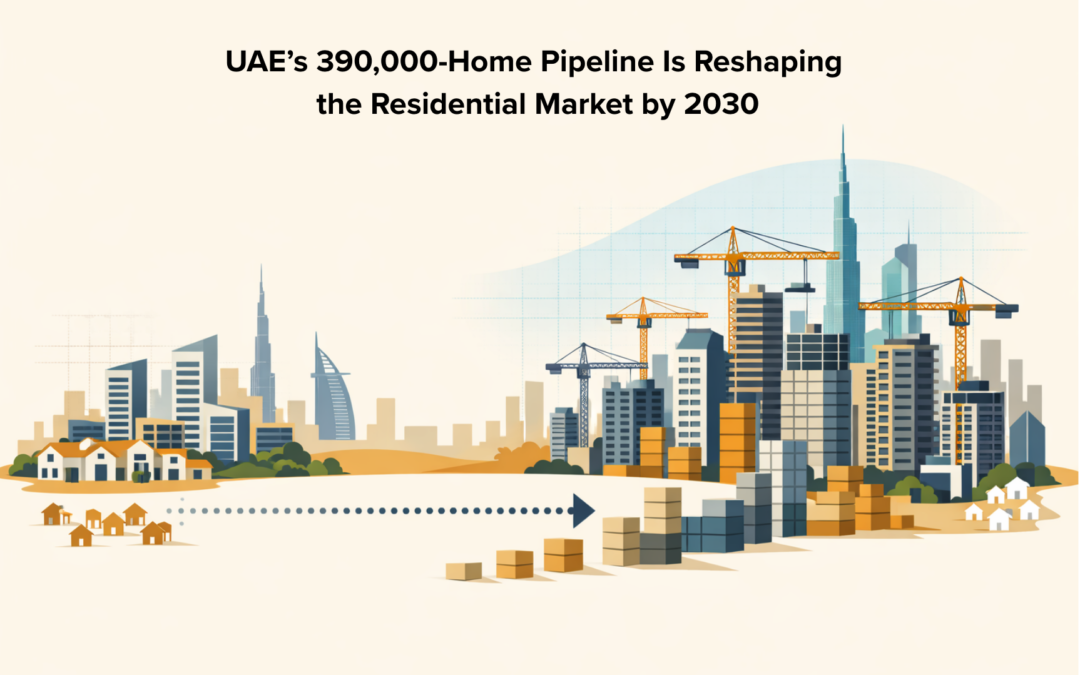
The UAE residential market 2030 outlook signals a decisive structural shift — with roughly 390,000 additional homes expected to be completed, lifting total stock from 1.08 million to around 1.47 million units. More than a numerical rise, this shift signals a structural maturation of the market—moving away from speculative build cycles toward quality-led urbanism that prioritizes livability, resilience, and long-term value creation.
Dubai vs Abu Dhabi: How Each Market Is Absorbing the 2030 Housing Pipeline
Dubai continues to lead on volume and pace. Most new supply will be absorbed through large, integrated communities that pair high-density apartments with retail, offices, hospitality, and recreation. This mixed-use logic supports efficient land utilization and serves a mobile, professional population that values connectivity and convenience. It also improves absorption predictability, enabling residents to live, work, and socialize within a unified urban fabric.
Abu Dhabi, by contrast, is leaning into premium scarcity. The capital’s pipeline is increasingly weighted toward luxury and ultra-luxury assets—waterfront districts, branded residences, and villa-led neighbourhoods. Emphasis on location, construction standards, and exclusivity is designed to attract long-duration residents and high‑net‑worth individuals seeking stability and asset preservation. This deliberate curation underpins pricing resilience even as supply grows regionally.
Also Read : Your 2026 Strategic Guide to Buying, Renting, or Investing in Dubai Real Estate
UAE Rental Market Outlook 2030: Stabilisation, Not Correction
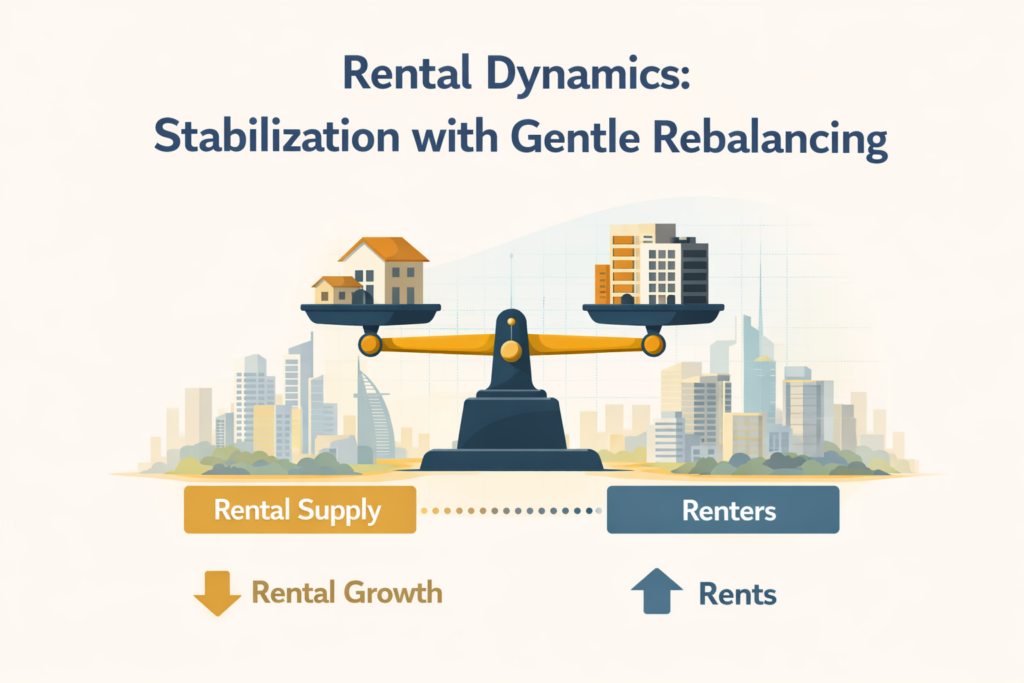
A pipeline of 390,000 units would traditionally imply near-term pressure on rents. Yet several moderating forces point to a more orderly outcome. Population growth and policy-driven mobility continue to generate organic rental demand, particularly in employment hubs with diversified sectors.
Delivery is increasingly phased and aligned with absorption, as developers stagger handovers to reduce quarter‑to‑quarter volatility. While rent growth is likely to moderate, a widespread contraction appears unlikely; tenants may gain negotiating leverage in submarkets seeing simultaneous completions, resulting in broader price stability rather than a sharp correction.
Also Read : Dubai Moves Ahead with Dh38bn Housing Expansion at Palm Jebel Ali and Nad Al Sheba
UAE Property Investment Strategy: What Buyers Should Know Before 2030

The UAE remains compelling for capital allocators given its tax-light framework, infrastructure investment, and global connectivity. Investor sentiment, however, is evolving. Momentum trading is giving way to hold strategies that prioritize build quality, sustainability credentials, and robust community amenities. Assets that integrate energy efficiency, digital infrastructure, and professional management are better positioned to sustain capital appreciation amid a larger supply base. Operational transparency—from escrow-backed payment structures to clear handover timelines and post-completion governance—continues to be a key driver of valuations and liquidity.
Also Read : Dubai Real Estate Records Historic Surge in January 2026
GCC Residential Market Growth: UAE Within a Broader 2030 Expansion
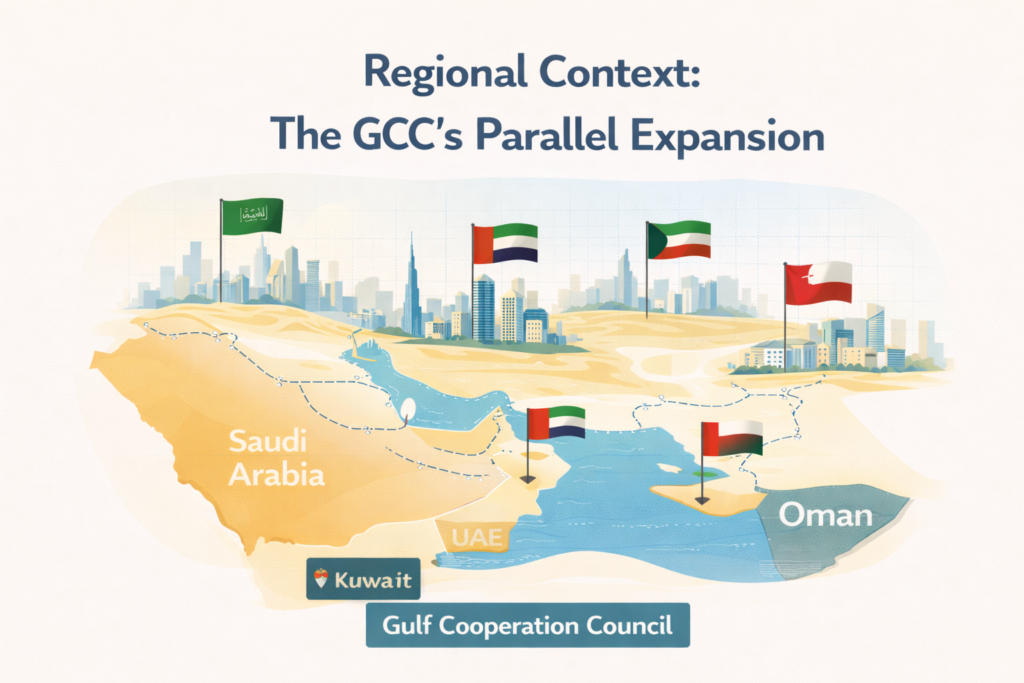
The UAE’s trajectory sits within a wider GCC growth narrative. Across the bloc, residential stock is set to rise from roughly 6.26 million units in 2025 to about 7.28 million by 2030. The UAE’s 390,000‑unit pipeline is propelled by expatriate inflows and tourism, while Saudi Arabia’s larger planned increase is anchored in giga‑projects across major cities.
Selective gains elsewhere in the GCC are centered on targeted developments that address localized demand. In tandem, the region’s commercial office market is scaling, with total stock projected to approach the mid‑40 million square meter range by 2030, led predominantly by the UAE and Saudi Arabia.
Also Read : 2026 Begins Strong for Dubai Land Market: A Key Investment Focus for Investors
What the UAE’s Housing Pipeline Means for Developers, Investors & Tenants
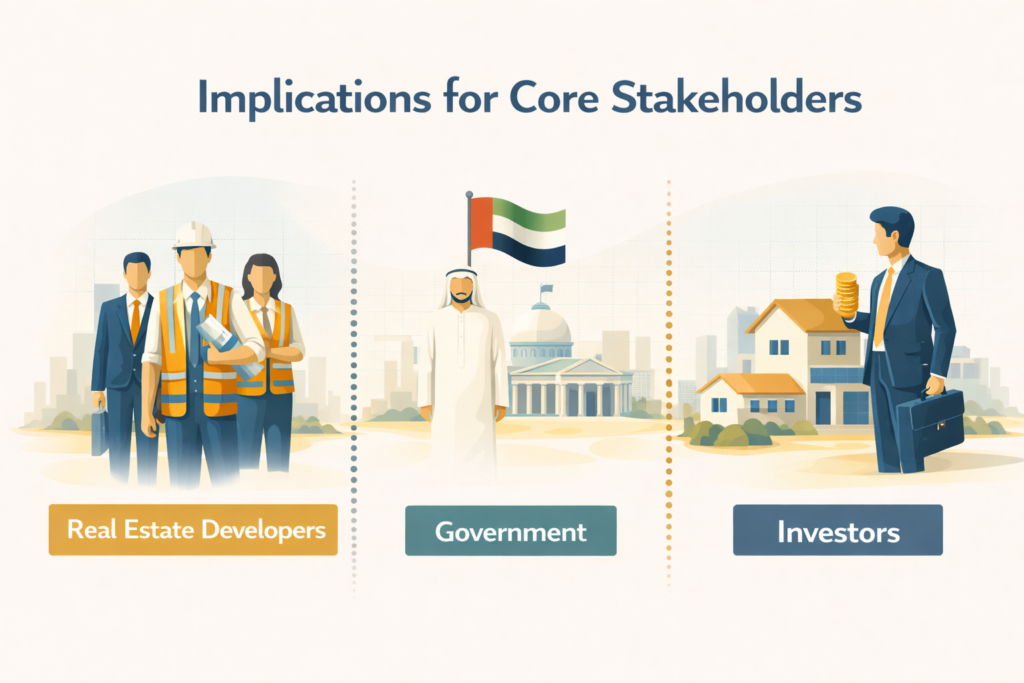
For developers, disciplined phasing, ESG integration, and community programming will help safeguard absorption and support pricing. Product‑market fit at the submarket level is likely to be decisive. For investors, enhanced due diligence on build quality, operator credentials, and neighbourhood fundamentals remains paramount, with an emphasis on stable income and downside protection.
For tenants, choice is expanding in delivery‑heavy corridors, improving affordability and optionality within well-managed, mixed‑use districts. For policymakers, synchronizing infrastructure with housing delivery and maintaining streamlined permitting and visa reforms will reinforce household formation and market depth.
Conclusion
The roadmap to 2030 points to a maturing, more resilient UAE housing ecosystem. With a sizeable yet structured supply pipeline and a sharpened focus on quality and livability, the market appears well placed to absorb new inventory without systemic stress. As infrastructure deepens and community services broaden, the UAE is evolving from a transitory hub to a durable global center for residence, work, and investment.