
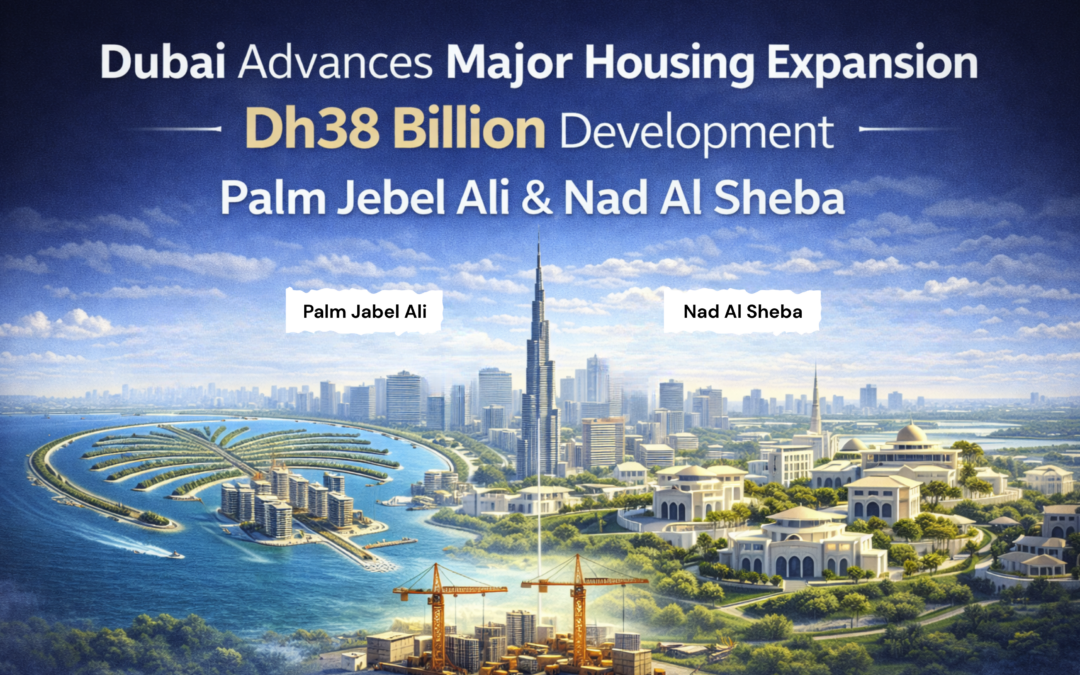
Dubai’s real estate landscape is entering another transformative phase as a landmark Dh38 billion development initiative prepares to introduce nearly 14,000 new residences across Palm Jebel Ali and Nad Al Sheba. The large-scale expansion reflects sustained confidence in the emirate’s property sector and reinforces its long-term urban growth strategy.
The residential projects form part of an extended strategic partnership between Aldar and Dubai Holding, bringing together Abu Dhabi’s leading listed developer and one of Dubai’s most prominent investment conglomerates. The agreement significantly broadens their joint development pipeline and underscores the strength of cross-emirate collaboration in shaping the UAE’s property market.
A Dual-Location Growth Strategy
What makes this development particularly notable is its balanced geographic positioning. By focusing on both the emerging waterfront destination of Palm Jebel Ali and the established residential zone of Nad Al Sheba, the initiative addresses different buyer segments while supporting Dubai’s broader expansion corridors.
Together, the two master-planned communities are expected to contribute approximately 14,000 units, ranging from apartments and townhouses to high-end villas. The scale of the investment highlights the emirate’s proactive approach to meeting future housing demand amid continued population growth and investor inflows.
Also Read: Downtown Dubai 2026: Why It Remains a Prime Investment Destination
Nad Al Sheba: Strengthening Family-Centric Living
The Nad Al Sheba component will occupy a vast land parcel in Dubai’s eastern growth belt. Known for its accessibility and established residential character, the area has steadily gained popularity among families seeking larger homes in well-connected neighborhoods.
The upcoming development will introduce a diverse mix of housing options designed to create a self-contained community environment. In addition to residential units, the master plan is expected to integrate green spaces, community facilities, retail offerings, and lifestyle amenities, reinforcing Dubai’s emphasis on holistic neighborhood design.
By expanding supply in this corridor, the project also supports price stability in the mid-market and upper-mid-market segments — an important factor as demand for family housing remains robust.
Also Read: Supercars Meet Skyline: Why Luxury Car Brands Are Investing in Dubai Real Estate
Palm Jebel Ali: Reviving a Landmark Waterfront Vision
The Palm Jebel Ali portion of the agreement carries significant symbolic and commercial weight. As one of Dubai’s most ambitious waterfront master plans, the island is being re-positioned as a next-generation coastal destination that combines luxury living with sustainable urban planning.
The new residential offerings will include premium waterfront homes, some with direct beach access, targeting both end-users and global investors seeking exclusive coastal properties. The development is expected to feature a blend of branded residences and bespoke villas, elevating the island’s appeal in the ultra-prime segment.
Palm Jebel Ali’s revival aligns with Dubai’s broader strategy of enhancing its luxury property portfolio while diversifying away from over concentration in existing beachfront districts. As international capital continues to flow into the emirate, new waterfront inventory is likely to attract significant interest.
Also Read: 2026 Begins Strong for Dubai Land Market: A Key Investment Focus for Investors
Market Implications and Investor Confidence
The Dh38 billion pipeline signals more than just new housing supply — it reflects deep confidence in Dubai’s long-term fundamentals. Strong transaction volumes, population growth, and sustained foreign investment have created a supportive environment for large-scale master developments.
For Aldar, the expansion strengthens its footprint in Dubai, complementing its established presence in Abu Dhabi. For Dubai Holding, the collaboration accelerates the monetization of strategic land assets while maintaining institutional-grade development standards.
The scale of the projects also suggests a multi-year delivery timeline, ensuring a steady addition of inventory rather than a sudden supply surge. This phased approach is consistent with Dubai’s evolving focus on sustainable growth and demand-driven planning.
Alignment with Dubai’s 2040 Vision
The development initiative fits squarely within the framework of the Dubai 2040 Urban Master Plan, which prioritizes enhanced quality of life, expanded residential districts, and improved infrastructure connectivity. By targeting both inland and waterfront locations, the projects reinforce a diversified urban structure rather than concentrating growth in a single corridor.
In addition, the emphasis on integrated communities supports the city’s long-term ambition to create live-work-play environments that reduce commuting times and improve overall livability.
Also Read: Dubai Real Estate Records Historic Surge in January 2026
A Defining Chapter in Dubai’s Property Evolution
With nearly 14,000 homes in the pipeline, this Dh38 billion commitment marks one of the most significant residential undertakings in recent years. It demonstrates how Dubai continues to leverage strategic partnerships to scale development responsibly while catering to multiple segments of the market.
As Palm Jebel Ali regains momentum and Nad Al Sheba expands its residential footprint, the combined impact is set to reshape key districts of the emirate. For investors and residents alike, the message is clear: Dubai is not only sustaining its real estate growth cycle — it is carefully engineering its next chapter.
Also Read: Why Dubai Maritime City Is Emerging as Dubai’s Smartest Real Estate Investment Region